
Building Systems That Serve People: Leadership, Procurement, and the Future of Entrepreneurship in San Antonio
There’s a quiet truth about leadership that most organizations learn the hard way:
You can build the most efficient process in the world.
You can implement cutting-edge technology.
You can hit every short-term deadline.
And still fail.
Because if the system doesn’t serve people, it won’t last.
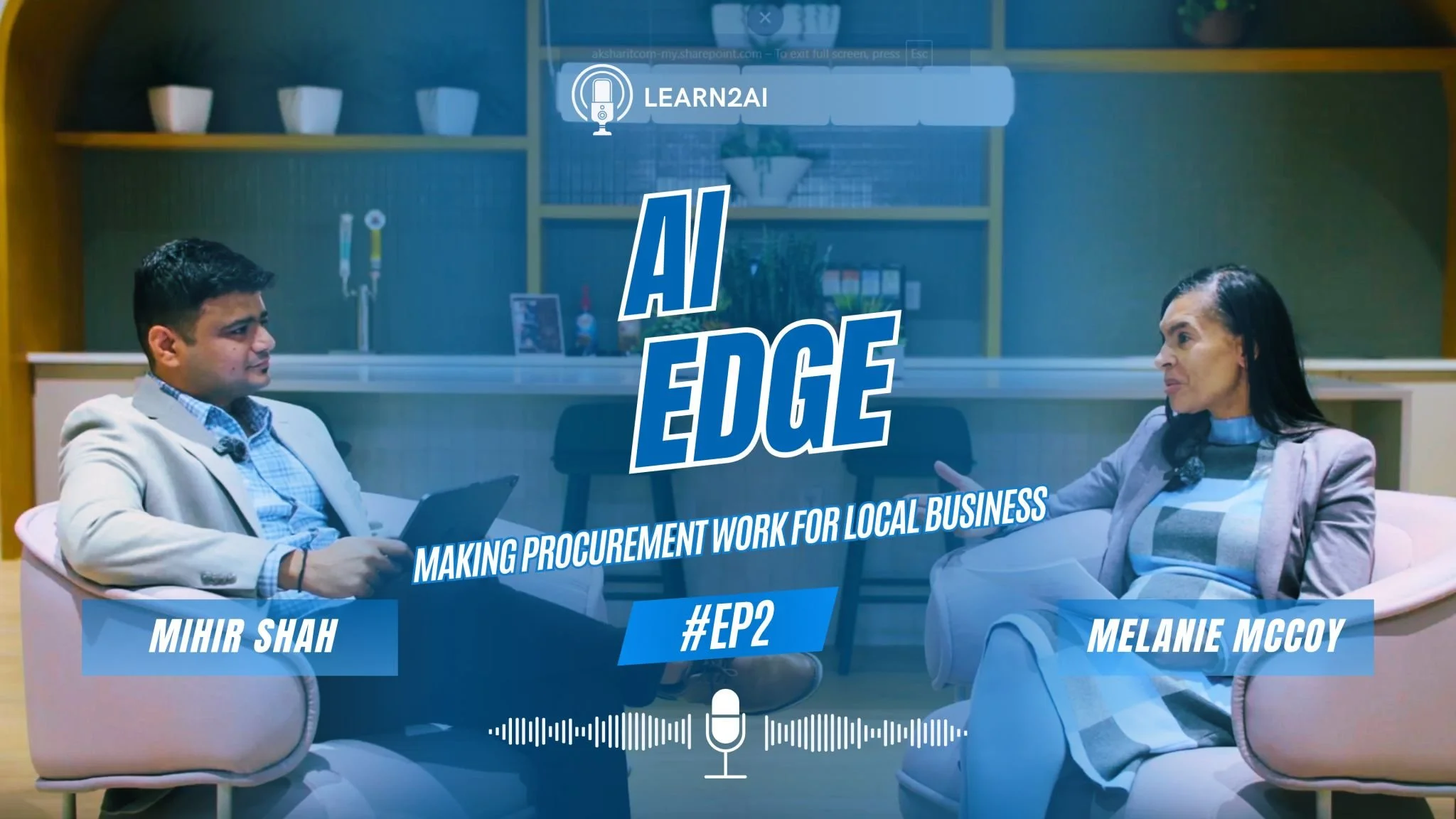
That philosophy sits at the core of how Melanie McCoy approaches leadership, procurement reform, and veteran entrepreneurship in San Antonio. Her perspective, shaped by military service, corporate leadership, and economic development work, is simple but powerful:
Sustainable systems are built around people, not just processes.
And in a city with $6 billion in annual local contracting opportunities, that mindset could be transformative.
The Leadership Lesson Most Organizations Miss
Melanie’s leadership style was shaped during her military career. Military systems are known for structure, discipline, and operational precision. But she learned something deeper while serving:
When leaders focus solely on processes and technology while ignoring the human element, transformation stalls.
In every sector—government, private industry, nonprofit—there’s a recurring pattern:
Solutions are built to meet immediate deadlines.
Systems are designed for short-term wins.
Growth and sustainment are afterthoughts.
The result? Processes that technically “work” but create long-term friction.
Sustainable transformation requires:
Vision beyond the current fiscal year
Buy-in from the people doing the work
Systems that evolve with growth
Without those elements, even well-designed initiatives collapse under their own weight.
The Untapped Power of Local Procurement
Most people hear “procurement” and think paperwork.
In reality, procurement is simply local government contracting—agencies buying goods and services from businesses in the community.
In San Antonio alone, that market represents roughly $6 billion per year.
That includes:
Landscaping contracts
Janitorial services
Office supplies
Infrastructure maintenance
Professional services
Yet many small businesses, especially veteran-owned businesses, never enter the space.
Why?
Because procurement systems are:
Complex
Fragmented
Difficult to navigate
Lacking clear education pathways
The opportunity exists. The access does not.
Economic Mobility Through Government Contracts
Commercial contracts can fluctuate. Market trends change. Revenue can disappear overnight.
Government buying cycles, however, are predictable.
Cities will always need:
Cleaning services
Maintenance
Supplies
Operational support
That consistency creates stable revenue streams.
Procurement isn’t just another contract vehicle. It can provide:
Long-term contracts
Capacity for scaling
Financial predictability
Business credibility
For veteran entrepreneurs transitioning from military service, this stability can be especially impactful.
What Veterans Bring to the Entrepreneurial Ecosystem
Veteran entrepreneurs often possess strengths that are difficult to teach:
Systems thinking
Operational discipline
Adaptability under pressure
Resilience
Mission-driven focus
But after leaving the structured military environment, ambiguity can feel overwhelming. The entrepreneurial world doesn’t provide clear chains of command or predefined playbooks.
That’s where ecosystem support becomes critical.
By building:
Strong networks
Accessible training
Procurement education
Partnership opportunities
San Antonio can harness veteran talent as a major economic engine.
The Hidden Barrier: Fragmented Systems
One of the largest obstacles to local procurement participation is fragmentation.
San Antonio operates across 14 separate agencies, each with:
Different registration portals
Unique procurement platforms
Separate compliance requirements
For a small business owner, this means repeating administrative tasks over and over—before even submitting a bid.
Administrative friction becomes a deterrent.
The ideal solution?
A unified system that:
Standardizes access
Streamlines registration
Reduces redundancy
Improves transparency
System simplification isn’t just operational efficiency. It’s economic inclusion.
AI: A Tool, Not a Replacement
Artificial intelligence is already changing how small businesses engage in procurement.
AI can:
Draft solicitation responses
Help write business plans
Support marketing efforts
Assist with legal research
Save hundreds of operational hours per year
But AI also comes with risks:
Inaccurate outputs
Overreliance on automation
Sophisticated scams and misinformation
The answer is education.
AI literacy and upskilling allow business owners to:
Increase capacity
Compete more effectively
Reduce administrative burden
But human judgment, creativity, and ethical decision-making remain irreplaceable.
Lessons from Purpose-Driven Leadership
During her time at USAA, Melanie saw what happens when mission and operational excellence align.
The soft skills she emphasizes today—trust, accountability, ownership, and integrity—are often the differentiators between organizations that grow and those that stagnate.
Technical expertise builds frameworks. Culture sustains them.
The Next 12–18 Months: Building Capacity and Ecosystem Strength
Looking ahead, the focus for San Antonio’s small business ecosystem includes:
Expanding veteran entrepreneur networks
Increasing access to capital
Enhancing certification education
Developing self-paced training tools
Collaborating with agencies to forecast contracting opportunities
Advocating for reduced procedural barriers
Promoting responsible AI adoption
A Model for Military Cities Nationwide
San Antonio has long been known as Military City USA.
But it also has the opportunity to become a national model for:
Veteran entrepreneurship
Procurement accessibility
AI integration with human oversight
Long-term economic ecosystem building
The foundation isn’t technology.
It isn’t policy alone.
It isn’t even funding.
It’s people.
When systems are built with people at the center, participation increases, trust strengthens, and economic growth becomes sustainable.
And in a city with $6 billion in opportunity, that shift could change everything.